As Simple as It Is, the gBalance Bar May Be One of the Most Versatile and Empowering Tools in Fitness and Wellness
In fitness, we are often taught to look for more: more weight, more resistance, more technology, more complexity.
Yet some of the most transformative tools do not overpower the body. They teach it.
The gBalance Bar™, or gBB, is one such tool.
At first glance, it appears remarkably simple: a lightweight, sleek aluminum bar held between the hands. It contains no weights, cables, sensors, springs, screens, or moving parts.
Its power lies not in what the bar does for you, but in what it requires you to discover within yourself.
The gBalance Bar does not carry the body, stabilize it externally, or provide something to lean upon. It acts as a precise physical reference that encourages the practitioner to organize posture, engage the core, coordinate the limbs, and create balance from within.
It does not hold you up.
It reveals how well you are holding yourself.
That distinction is the foundation of its purpose—and the science behind its effectiveness.
Balance is often misunderstood as the ability to remain upright on one leg or avoid falling. In reality, balance is a continuous process involving multiple systems working together.
The brain receives information from the eyes, the inner ear, the joints, the muscles, and the surfaces beneath the feet. It interprets that information and makes constant adjustments throughout the body.
Balance Is More Than Standing Still
Even when a person appears perfectly still, the body is making subtle corrections.
The ankles respond to changes in pressure. The hips adjust to shifts in the center of mass. The muscles surrounding the spine stabilize the trunk. The eyes help establish orientation, while the vestibular system of the inner ear contributes information about motion and position.
Balance is therefore not a single skill or muscle action. It is a coordinated conversation between the nervous system and the entire body.
The gBalance Bar gives that conversation a visible physical expression.
When the body becomes misaligned, the bar may tilt, rotate, drop, or shift. When one side of the body dominates, the hands and shoulders may reveal the imbalance. When the core loses engagement, the bar’s position often changes before the practitioner consciously recognizes what happened.
The bar becomes a source of immediate feedback.
It does not criticize or correct through force. It simply tells the truth.
The Difference Between External Support and Internal Stability
Many traditional fitness and rehabilitation tools provide external support. A person may hold a rail, wall, machine, chair, or fixed ballet barre while performing a movement.
This support can be valuable in certain situations, particularly when safety, rehabilitation, or limited mobility is a concern. However, holding onto a stable object may also allow the body to transfer some of its responsibility outward.
The arms may pull. The hands may grip. The shoulders may rise. The practitioner may lean into the support rather than organize the muscles required to create independent stability.
The gBalance Bar functions differently.
Because it is held freely and is not attached to anything, it cannot support the practitioner’s body weight. It cannot prevent a loss of balance. It cannot act as a crutch.
Instead, the practitioner must generate stability through muscular engagement, alignment, awareness, and control.
The gBalance Bar is therefore not something to lean on.
It is something to learn from.
The Core Is Not One Muscle
The word core is frequently used in fitness, but it is often reduced to the abdominal muscles visible at the front of the body.
True core function is far more complex.
The core includes multiple muscles surrounding the trunk and pelvis. These muscles help stabilize the spine, manage pressure within the torso, transfer force between the upper and lower body, and maintain posture during movement.
Core stability is not simply about tightening the stomach as hard as possible. It is about producing the appropriate amount of muscular engagement for the movement being performed.
Too little activation may allow the body to collapse, shift, or compensate. Excessive bracing may create unnecessary tension and restrict fluid movement or breathing.
The goal is intelligent engagement.
Within the gTonnicks® Method, this principle is expressed through Intentional and Purposeful Contraction of the Muscles—IPCM.
Every movement begins with conscious muscular preparation. The practitioner does not move first and hope the correct muscles respond afterward. The body is intentionally organized before and throughout the movement.
The core becomes the point from which the movement is initiated, controlled, and completed.
The gBalance Bar reinforces this process because the body must remain connected from its center to its extremities. A change in core engagement can affect the shoulders. A change in shoulder position can affect the hands. A change in the hands becomes visible through the bar.
The entire body becomes part of one coordinated action.
The Bar as a Feedback Instrument
One of the most important qualities of the gBalance Bar is its ability to provide immediate sensory feedback.
In movement science, the body relies heavily on proprioception—the internal sense of where the body is positioned and how it is moving. Proprioception allows a person to lift an arm without watching it, walk without staring at the feet, and make subtle postural adjustments throughout the day.
However, many people have become disconnected from these internal signals.
Sedentary habits, repetitive movement patterns, previous injuries, pregnancy, stress, fatigue, aging, and prolonged screen use can all influence posture and body awareness.
The gBalance Bar adds an external reference to the practitioner’s internal experience.
You feel the bar through both hands. You see its position in space. You notice whether it remains level. You observe how it responds as you rotate, bend, reach, squat, balance, or transfer weight.
This combination of visual, tactile, and proprioceptive information may help the practitioner become more aware of alignment and muscular coordination.
The bar transforms an invisible internal process into something that can be seen and felt.
Why Length Matters
The gBalance Bar is deliberately long enough to create a meaningful relationship between the hands, shoulders, trunk, and surrounding space.
A short object can be moved primarily through the wrists or elbows. A longer bar encourages the practitioner to consider the position of both arms and both sides of the body simultaneously.
Small changes become easier to notice.
If one hand rises, the entire bar tilts.
If one shoulder rotates forward, the line of the bar changes.
If the torso turns without control, the bar reveals the rotation.
If the practitioner loses symmetry, the difference becomes visible from one end of the bar to the other.
The bar’s length also expands spatial awareness. It asks the practitioner to understand not only where the body is, but also how the body occupies and moves through the surrounding environment.
This makes it useful for posture, balance, mobility, coordination, controlled rotation, gait preparation, lower-body movements, standing sequences, and graceful full-body patterns.
The Relationship Between the Hands and the Core
The hands contain a high concentration of sensory receptors. How an object is held can influence muscular activity throughout the arms, shoulders, upper back, and trunk.
In gTonnicks practice, the gBalance Bar is not grasped with excessive tension. The grip is purposeful, refined, and connected to the rest of the body.
When the practitioner holds the bar with awareness, the hands become more than endpoints. They become part of a continuous muscular chain extending through the arms, shoulders, back, abdominal region, pelvis, legs, and feet.
This is one reason the bar can be so empowering.
The practitioner is not merely performing an isolated exercise. She is learning to experience the body as an integrated whole.
The feet connect to the floor.
The legs organize the pelvis.
The core stabilizes the trunk.
The shoulders align over the rib cage.
The arms extend with purpose.
The hands complete the line through the bar.
Every part has a role. No part moves without relationship to the others.
The Nervous System Learns Through Repetition
Movement is not governed by muscles alone. The nervous system determines when muscles activate, how strongly they contract, and how different parts of the body coordinate with one another.
When a movement is practiced repeatedly with attention and precision, the nervous system becomes more familiar with the pattern.
This does not mean every movement becomes permanently perfect. It means the body may become more efficient at recognizing and reproducing a practiced strategy.
The gBalance Bar supports this learning process by encouraging consistency.
The practitioner receives immediate information during every repetition. Rather than completing a movement without knowing whether the body remained aligned, the bar provides a continuous point of reference.
Was the bar level?
Did the shoulders remain relaxed?
Did the core stay engaged?
Did the practitioner shift into one hip?
Did the arms remain connected to the trunk?
Did the breath continue?
Each repetition becomes an opportunity to observe, adjust, and refine.
The objective is not mechanical perfection. It is increasing awareness and control.
Posture as a Dynamic Skill
Posture is commonly treated as a fixed position: shoulders back, chest up, stomach in.
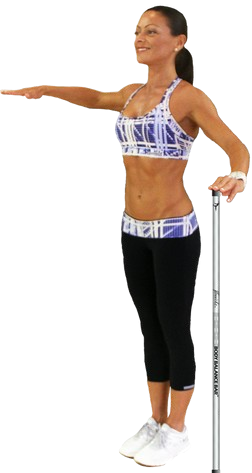
But healthy posture is not a rigid pose. It is the body’s ability to organize itself appropriately for the task at hand.
The posture required for standing differs from the posture required for walking, lifting, reaching, rotating, carrying a child, or rising from the floor.
Good posture must therefore be adaptable.
The gBalance Bar helps transform posture from a static instruction into a dynamic practice.
As the body moves, the practitioner learns to maintain length through the spine, position the shoulders with greater awareness, organize the rib cage over the pelvis, and control changes in the center of gravity.
The bar provides a line through space against which the body’s organization can be observed.
It becomes a moving posture check.
Why the gBalance Bar Matters for Mothers
Motherhood can create significant changes in the way a woman experiences and organizes her body.
During pregnancy, the center of gravity shifts as the baby grows. The pelvis, rib cage, spine, and gait may adapt. Muscles may be asked to manage unfamiliar loads, while hormonal and structural changes can affect stability and movement.
After childbirth, the body continues to adjust.
Core function may feel different. Posture may change through feeding, carrying, lifting, soothing, and caring for a baby. Fatigue may influence coordination. Repetitive one-sided habits—such as holding a child predominantly on one hip—may contribute to muscular imbalance.
The goal is not to judge these adaptations. They are part of the body’s remarkable response to motherhood.
The goal is to help a woman reconnect with herself.
Because the gBalance Bar is lightweight and does not depend on heavy resistance, it can provide a gentle way to explore posture, balance, symmetry, breathing, and core awareness.
Used appropriately and with professional guidance when needed, the bar can help mothers rediscover how their bodies organize movement.
It does not demand aggression.
It invites attention.
It does not ask a mother to fight against her body.
It helps her listen to it.
For women who have spent months or years placing the needs of others before their own, that reconnection can be deeply empowering.
Strength Without Excess
Much of modern fitness is measured by external output: how much weight was lifted, how fast the body moved, how many calories were burned, or how exhausted the person became.
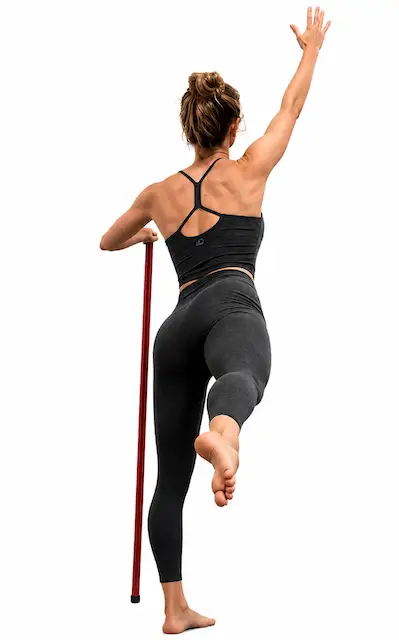
The gBalance Bar introduces a different measurement.
How well did you move?
How connected were you to your body?
Could you maintain control without unnecessary tension?
Could you stay aligned as your position changed?
Could you breathe while creating stability?
Could you move with both strength and elegance?
This does not reject intensity or resistance training. It places them within a larger understanding of physical ability.
Strength is most useful when the body can control it.
Mobility is most valuable when the body can stabilize it.
Balance is most dependable when it is generated internally.
Movement becomes more empowering when the practitioner understands what she is doing and why.
A Tool for Fitness and Wellness
The gBalance Bar belongs naturally within fitness, but its potential extends into the broader experience of wellness.
Wellness is not only the absence of illness. It includes awareness, confidence, physical autonomy, calm, presence, and the ability to move through daily life with greater ease.
Practicing slowly and intentionally with the bar can require concentration. The mind must remain present. The breath must be noticed. The practitioner must pay attention to sensations that are easily overlooked during fast or highly repetitive exercise.
This creates a meditative quality.
The bar becomes a focal point connecting intention with action.
For some, the benefit may be improved body awareness. For others, it may be better posture, more confidence in standing, smoother movement, greater coordination, or the simple pleasure of feeling connected to the body again.
The gBalance Bar does not promise to replace every other form of movement or fitness equipment.
Its value lies in how many principles it can help teach through one uncomplicated design.
Core activation.
Postural awareness.
Symmetry.
Balance.
Coordination.
Mobility.
Breathing.
Focus.
Control.
Grace.
Few tools are capable of participating in so many dimensions of physical practice while remaining so accessible.
Two Sizes, One Purpose
The gBalance Bar is crafted from lightweight aluminum with a smooth finish and a clean, elegant design.
It is made in two sections that screw securely together to form one unified bar. This allows for easier storage and transportation without compromising the experience of practicing with a full-length tool.
It is available in two sizes:
42-inch gBalance Bar
Recommended for individuals approximately 5 feet 6 inches tall or shorter.
48-inch gBalance Bar
Recommended for individuals approximately 5 feet 7 inches tall or taller.
The recommended size helps preserve the proportions, handling, and spatial feedback intended within the gTonnicks Method.
Simple in Form. Extraordinary in Function.
The gBalance Bar does not rely on complication to create value.
It does not need to be heavy to develop strength.
It does not need to be fixed to a wall to influence balance.
It does not need digital technology to deliver feedback.
It does not need to move on its own to teach the body how to move.
Its simplicity is precisely what makes it powerful.
The gBalance Bar removes distraction and brings the practitioner back to the essentials: the body, the breath, the core, the mind, and the quality of the movement being created.
As simple as it is, the gBalance Bar may be one of the most versatile and empowering tools in fitness and wellness.
Not because it does more for the body.
Because it teaches the body to do more for itself.
Discover the gBalance Bar
Experience a signature tool of the gTonnicks Method—created to help you strengthen your center, refine your posture, deepen your awareness, and move with greater control.
Move with elegance. Build strength with purpose.